


PandaVPN vs Turbo VPN: Which VPN Performs Better in Security & Performance (2026)?
 Sharon
  2026.04.01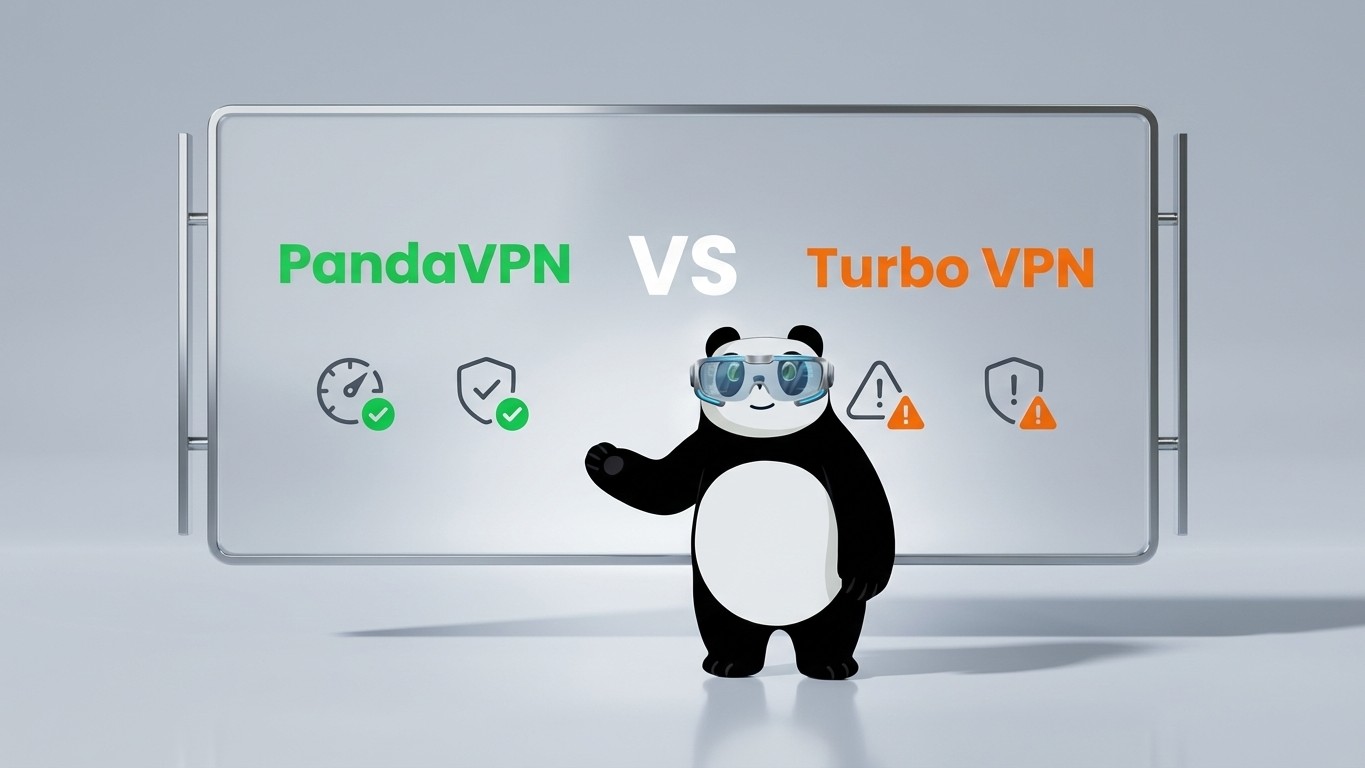
When comparing VPNs in 2026, the real question is no longer just about access—it’s about how securely and efficiently your data is handled in real-world use.
Both PandaVPN and Turbo VPN offer basic VPN functionality, but their differences become clear when you look closely at privacy architecture, network performance, and stability.

Privacy Architecture & Data Exposure
A VPN’s core purpose is to protect your identity and data—but not all systems are designed the same way.
Turbo VPN follows a more traditional model, where user activity is routed through shared infrastructure, and account systems are tied to standard identifiers.
PandaVPN takes a different approach:
- No email-based account system
- Users are assigned a random digital ID
- Payments are processed via independent third-party platforms
- No internal access to billing or financial data
👉 This creates a structure where user identity and payment data are fully separated from the service itself
From a security standpoint, minimizing stored data significantly reduces potential exposure risks.
Network Performance & Stability
Performance differences become more noticeable under real usage conditions.
Turbo VPN:
- Shared server infrastructure
- Performance fluctuations during peak usage
- Higher likelihood of congestion
PandaVPN:
- Optimized routing architecture
- Dedicated nodes for specific use cases
- More stable performance under load
👉 The key difference is not just speed, but consistency and reliability over time
This is especially important for activities like gaming or high-resolution streaming, where connection stability matters more than peak speed.
Traffic Handling & Optimization
How a VPN handles traffic directly affects user experience.
Turbo VPN typically routes all traffic through general-purpose servers, meaning different types of usage (streaming, browsing, downloads) compete for the same resources.
PandaVPN separates and optimizes traffic through:
- Dedicated routing for gaming
- Optimized paths for streaming services
- Reduced network hops
👉 This leads to lower latency and more predictable performance
Streaming & Access Reliability
Both VPNs are capable of accessing global content, but consistency differs.
Turbo VPN:
- Access can vary depending on server load
- Requires switching between nodes for stable results
PandaVPN:
- Stable access to major platforms
- Clearly structured server options
- Reduced need for manual switching
👉 The advantage lies in reliability and ease of connection
Final Take
Both PandaVPN and Turbo VPN provide core VPN functionality, but they are built with different priorities.
Turbo VPN delivers a general-purpose solution suitable for basic connectivity.
PandaVPN focuses on:
- minimizing data exposure
- optimizing network performance
- improving connection stability
👉 resulting in a more controlled and predictable experience
For users who prioritize security structure and consistent performance, PandaVPN offers a more refined approach in 2026.
A more stable, private, and optimized VPN experience.

Related Posts



Featured Posts